Booking choice: The Stone Town, spice farm and Prison Island tour, from $55 per person. Check dates Tour details
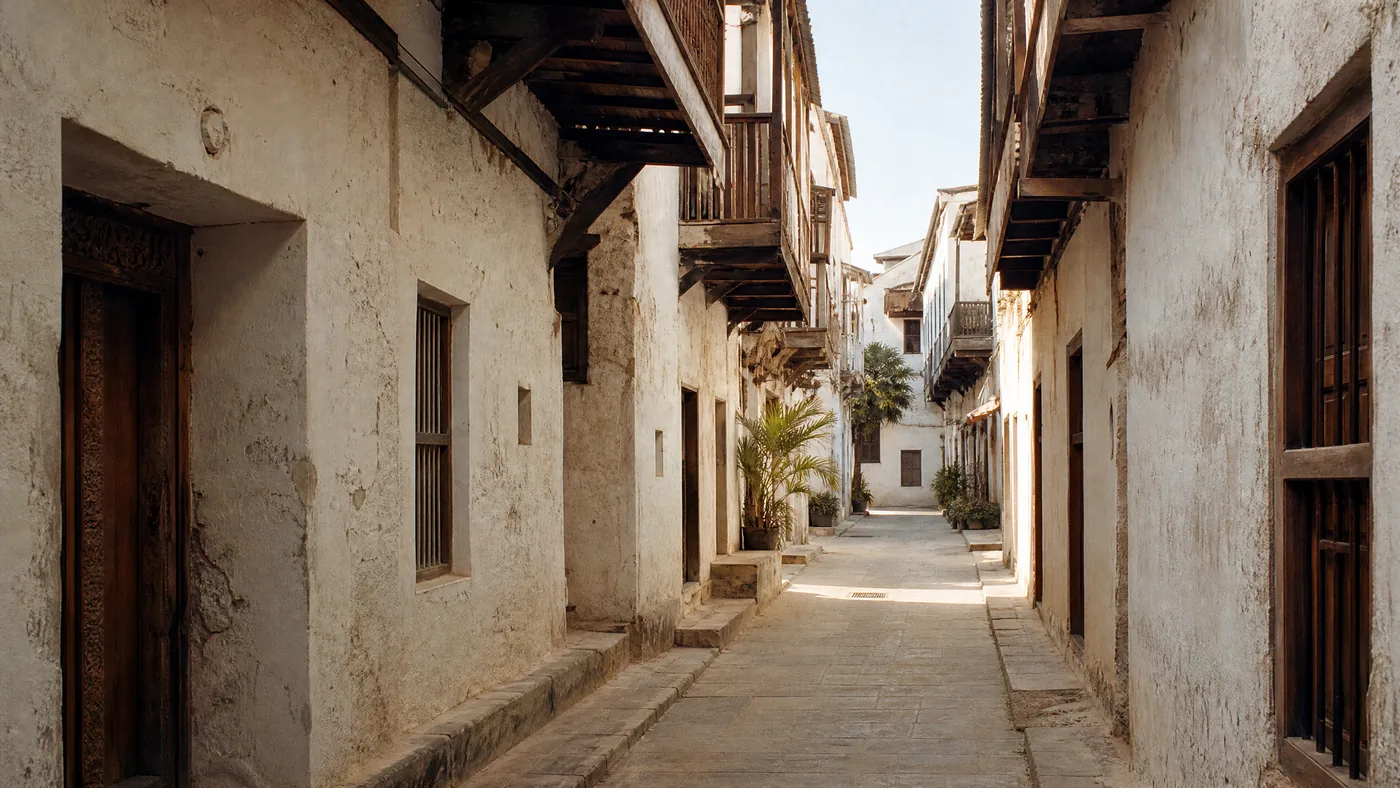
Stone Town was the capital of the Omani sultans of Zanzibar in the 19th century, the hub of a trade in cloves, ivory and enslaved people that reached deep into Africa. Its houses mix Arab, Persian, Indian, European and African traditions, and UNESCO listed it as a World Heritage Site in 2000.
This guide walks through the things to do in Stone Town, says which sights have a ticket and what the sources give for it, and shows which tours include what. Walking the streets is free, and much of the best of the town costs nothing at all.
The quick answer
The top things to do in Stone Town are the Old Fort and Forodhani Gardens on the seafront, the former slave market at Christ Church, Darajani Market, the carved doors, the Palace Museum and Freddie Mercury's house. In the evening, watch the sunset from a dhow or a rooftop and eat at the Forodhani night market. By day, take the boat to Prison Island.
What are the top things to do in Stone Town?
Walk the seafront from the Old Fort, visit the former slave market and Christ Church, explore Darajani Market and the lanes of carved doors, see the Palace Museum and Freddie Mercury's house, and spend an evening at Forodhani.
Most sights sit within a short walk of each other. The table gives each one, its ticket as the sources state it, and a note. Prices at the door change, so treat them as a guide and bring cash in US dollars or shillings.
| Sight | Where | Ticket | Good to know |
|---|---|---|---|
| The Old Fort (Ngome Kongwe) | Seafront, facing Forodhani | Free to walk into the courtyard | Craft shops, and music and dance in the amphitheatre most evenings |
| Forodhani Gardens | Seafront | Free | The food market starts after sunset |
| The House of Wonders (Beit al-Ajaib) | Mizingani Road | Closed, seen from outside | Restoration under way after the 2020 collapse |
| The Palace Museum | Mizingani Road, north of the House of Wonders | Ticket at the door | Life in the sultans' palace |
| Christ Church and the former slave market | Mkunazini Road | $10 per person | Not included on many walks; included on some options |
| Darajani Market | Darajani Road | Free | The main food market, with fish, fruit and spices |
| The Hamamni Persian Baths | Hamamni, in the old town | Small fee at the door | Some parts are private homes today |
| The Freddie Mercury Museum | Kenyatta Road, Shangani | $10 per adult | Open every day; often a stop from outside on walks |
| The doors and the lanes | All over the old town | Free | Gizenga Street and Kenyatta Road are good for doors |
Ticket sources: the slave market price is from the private walking tour and the local life tour listings; the Freddie Mercury museum price for non-residents is from the Serena Hotels page about the museum, and the walking tour lists it at about $8. Wikivoyage and Wikipedia describe the Old Fort courtyard as a cultural center open to visitors.
What can you see on the seafront: the Old Fort, Forodhani and the House of Wonders?
Three landmarks side by side. The Old Fort, built by the Omanis around 1699, has a courtyard with shops and an amphitheatre. Forodhani Gardens is the park by the sea. The House of Wonders is closed and seen from outside.
- The Old Fort (Ngome Kongwe). The oldest building in Stone Town, a square of high brown walls with battlements on the seafront. Wikipedia says the Omanis built it around 1699 on the site of an earlier Portuguese church. It was later a prison and barracks. Today the courtyard is a cultural center with craft shops, a restaurant, a tourist information desk and an open-air amphitheatre for music and dance. It is the meeting point for many tours on this site.
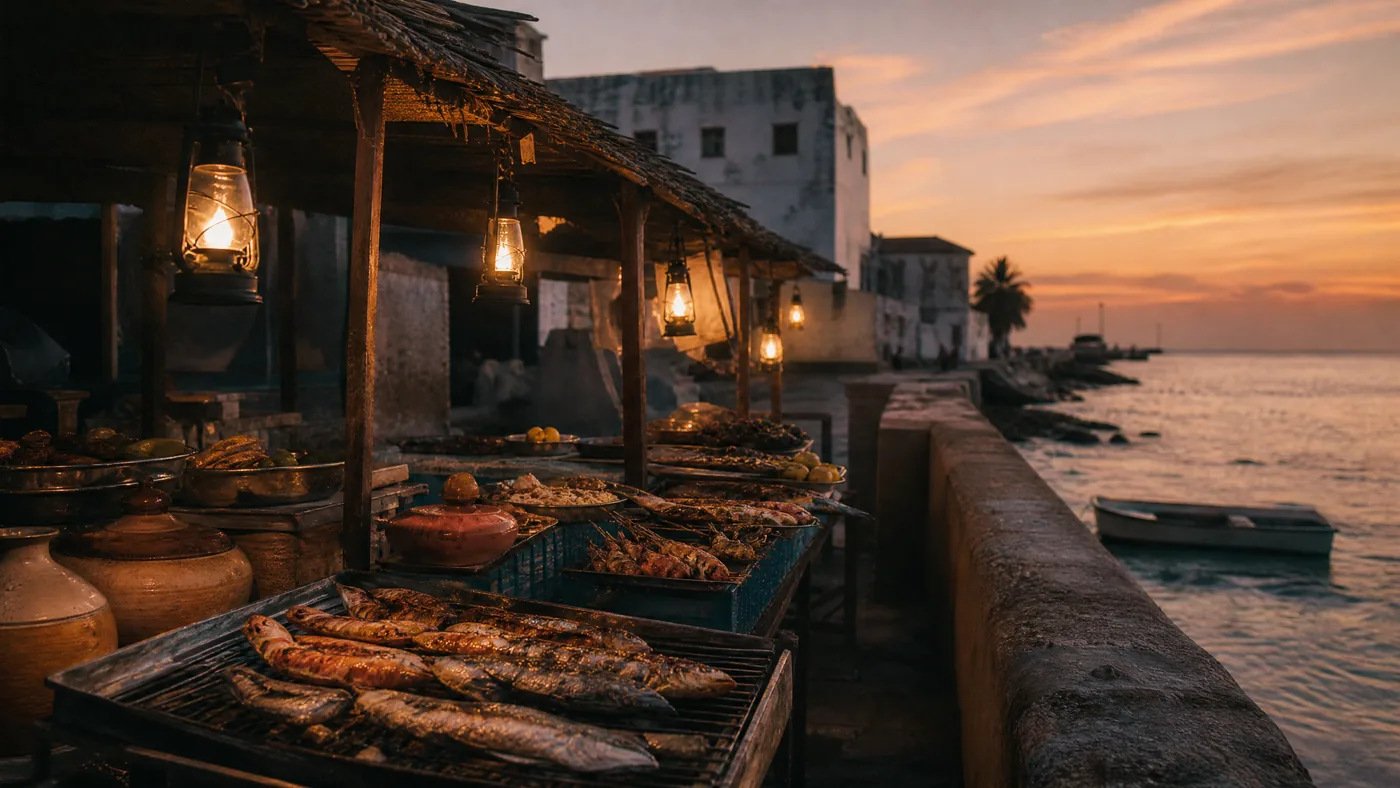
- Forodhani Gardens. A small park along the seawall, restored by the Aga Khan Trust for Culture. By day there are benches under big old trees and a view over the harbor. After sunset the food stalls come out.
- The House of Wonders (Beit al-Ajaib). Built in 1883 for Sultan Barghash on Mizingani Road, it was the first building in Zanzibar with electricity and the first in East Africa with a lift, per Wikivoyage. Parts of the veranda and roof collapsed in 2012 and 2015, and much of the front facade including the clock tower in December 2020. It is closed while restoration goes on, and you see it from the road.
A good first hour in Stone Town: start at the Old Fort, cross to Forodhani, and walk north along Mizingani Road with the sea on your left.
Is the Palace Museum worth a visit, and what is the Old Dispensary?
Yes, for an hour of royal Zanzibar: the Palace Museum shows how the sultans' family lived. The Old Dispensary, a short walk north, is one of the most finely decorated buildings in town, seen from outside.
The Palace Museum. The former Sultan's Palace stands on the seafront north of the House of Wonders. It was built in the late 19th century, and Lonely Planet notes that it was largely destroyed in the British bombardment of 1896, the Anglo-Zanzibar War remembered as the shortest war in history, and then rebuilt. Wikivoyage describes the museum inside as a picture of the daily life of the royal family, with items that belonged to Sayyida Salme, the Zanzibari princess who left for Europe. The local life tour includes the Palace Museum among its highlights.
The Old Dispensary. Built from 1887 to 1894 as a charity hospital, per Wikivoyage, with large carved wooden balconies, stained-glass windows and stucco decoration. It fell into decay and was carefully restored by the Aga Khan Trust for Culture. You see it best from the street, and from the sea on the sunset dhow cruise, which passes it along the waterfront.
How do you visit the former slave market at Christ Church?
Buy a ticket at the cathedral on Mkunazini Road; the walking tour listings give $10 per person. You see the cathedral, built from 1873 to 1879 on the site of the last slave market, the underground chambers and the memorial.
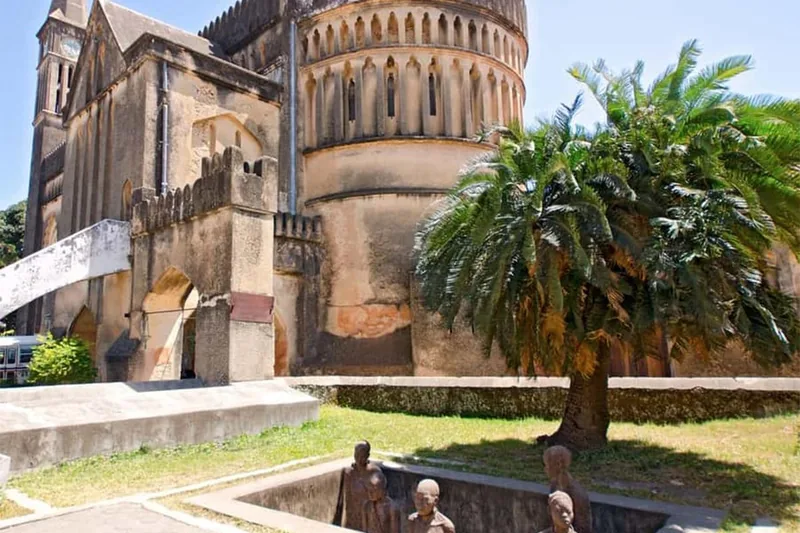
This is the most important stop in Stone Town, and the one people remember. Christ Church Anglican Cathedral was built where the biggest slave market of Zanzibar stood. Wikipedia records that the foundation stone was laid on Christmas Day 1873 and the church opened at Christmas 1879, built to mark the end of the trade. The altar is said to stand where the market's whipping post was.
- The chambers. Underground, by the cathedral, are small, low stone rooms where captives were held before sale. Standing inside them, even for a few minutes, says more than any book.
- The memorial. In the square, figures of enslaved people stand in a pit, bound by chains.
- The cathedral. Coral stone, a barrel-vaulted roof, and a cross made from the wood of the tree that grew where David Livingstone's heart was buried, per Wikipedia.
The exhibit tells the history of the East African slave trade with care, and a guide adds the human story. Check what your tour includes: the private walking tour lists the $10 ticket as not included, the local life tour includes it only if you pick that option, and the history walk begins at the old slave market and lists entrance fees by option.
Start at the old slave market with a top-rated local guide, then the Old Fort, the House of Wonders and the spice market, with pickup at your Stone Town hotel.
Check dates for the Stone Town history walkWhat should you see in the lanes: Darajani Market, the doors and Jaws Corner?
Darajani Market for fish, fruit and spices, the carved doors with brass studs on Gizenga Street and Kenyatta Road, and the coffee sellers and talkers at Jaws Corner. All free.
Darajani Market. The main market of Stone Town, also known as the Estella Market. Wikipedia says the main hall was built in 1904 for Sultan Ali bin Hamud. Inside, it is fish and meat, mountains of fruit and sacks of cloves, cinnamon and pepper; around it, shops sell everything from cloth to phones. The street food tour starts here at 18:00, and most daytime walks pass through it.
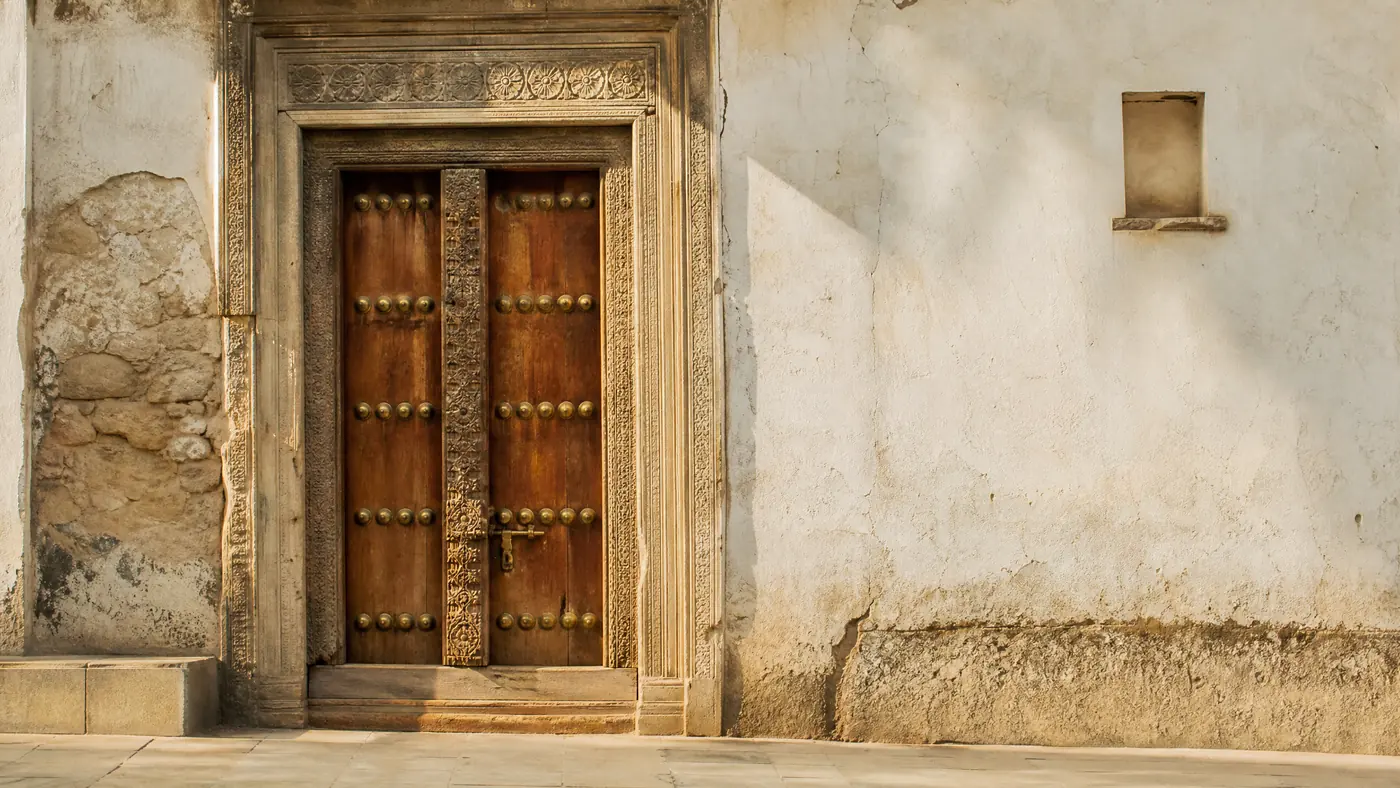
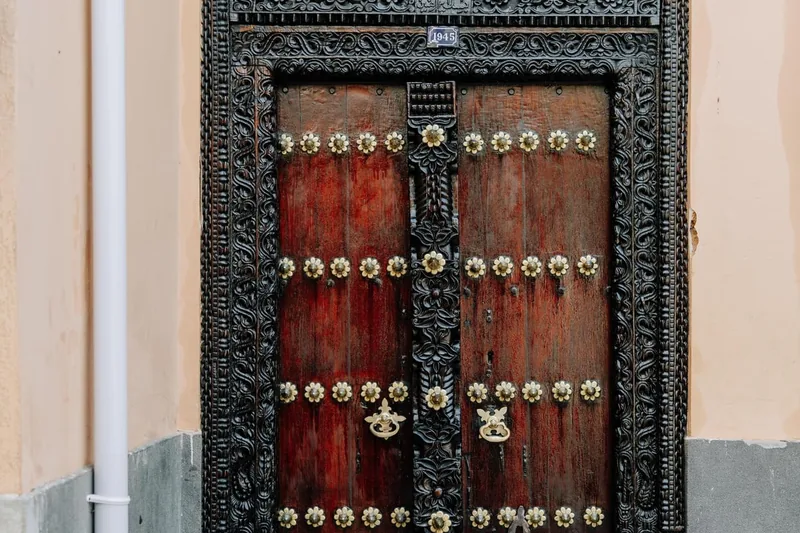
The doors. The carved wooden doors are the pride of Stone Town. Wikipedia explains the two main styles: Indian doors with rounded tops, often with big brass studs, and rectangular Omani doors. Carvings are often verses of the Quran, sometimes lotus flowers for prosperity. Look up as you walk Gizenga Street and Kenyatta Road, two of the best lanes for them.
Jaws Corner. A small square in the middle of the old town where men sit on the stone benches with tiny cups of strong coffee, board games and the news of the day. The hidden history private walk stops here, along with the coffee bazaar and the Hamamni Baths.
Where are Freddie Mercury's house, the Hamamni Baths and St Joseph's Cathedral?
All in the old town, a few minutes apart. Freddie Mercury was born in Stone Town in 1946, and a museum on Kenyatta Road tells his story. The Hamamni Baths were built for a sultan; St Joseph's is the Catholic cathedral.
- Freddie Mercury's house. The singer of Queen was born Farrokh Bulsara in Stone Town on 5 September 1946. The Freddie Mercury Museum on Kenyatta Road opened in November 2019, and the Serena Hotels page about it describes photographs and memorabilia from his childhood in Zanzibar to his years with Queen. It opens every day from 10:00 until 18:00. Many walks pass the house and leave the museum to you; the history walk has an optional stop of about 15 minutes.
- The Hamamni Persian Baths. Public baths built between 1870 and 1888 for Sultan Barghash bin Said by Shirazi architects, per Wikipedia. They no longer work as baths but are open to visitors, in part. The hidden history walk lists the entry fee as optional.
- St Joseph's Cathedral. Built by French missionaries in the late 19th century, per Wikivoyage, with twin spires above the rooftops. The private walking tour visits it near the end of the walk.
Three hours with your own guide: the old slave market, Darajani Market, the Sultan's palace, Freddie Mercury's house and St Joseph's Cathedral, from the Old Fort.
Explore the private Stone Town walking tour Tour detailsWhat can you do in Stone Town in the evening?
Watch the sunset from a dhow or a rooftop, then eat at the Forodhani night market. Wikivoyage lists rooftop restaurants with views over the town and the sea; be discreet with alcohol.
The light softens, the call to prayer drifts over the roofs and the whole town turns toward the sea.
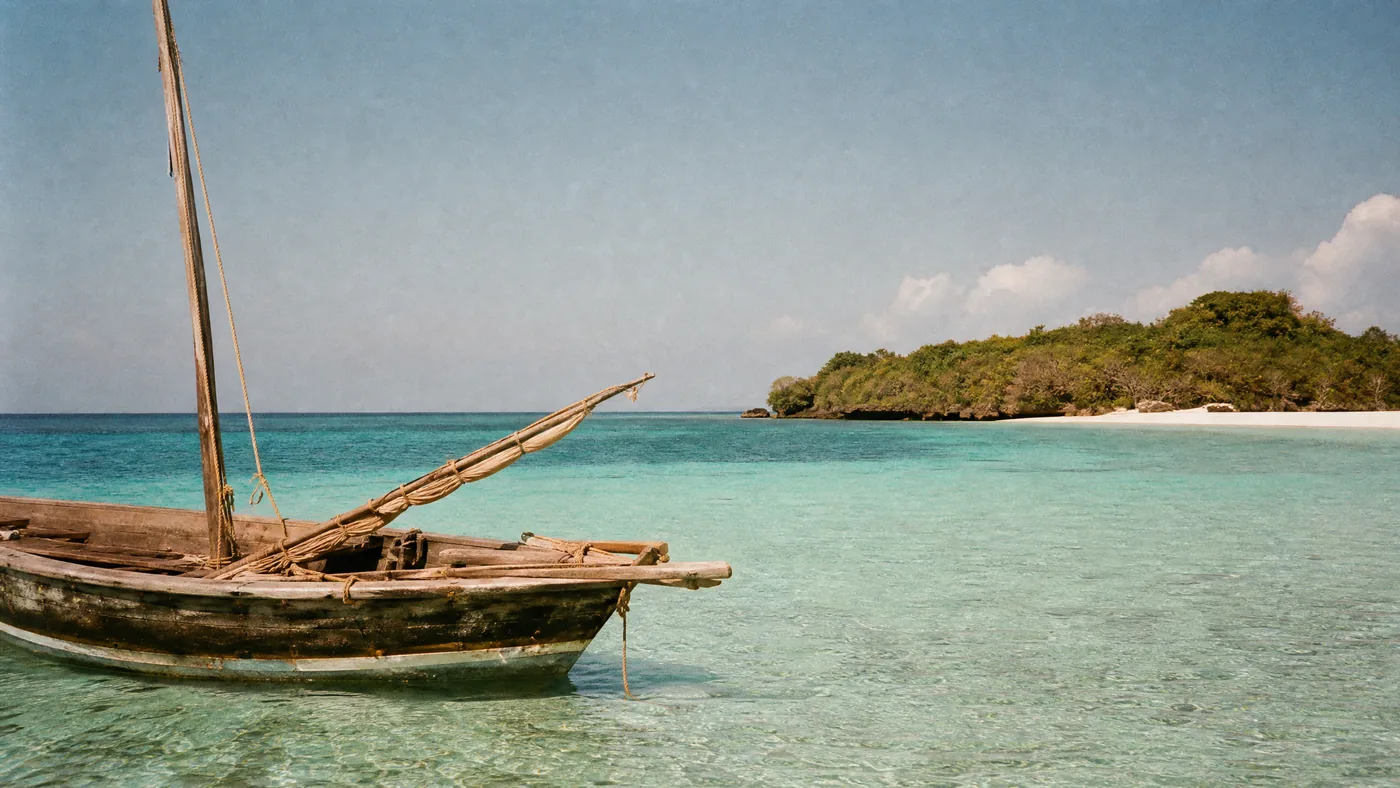
- A sunset dhow. The Stone Town sunset dhow cruise sails from Forodhani for 2 to 2.5 hours along the waterfront, past the House of Wonders and the Old Dispensary, with snacks, soft drinks and live music inspired by taarab, the sung poetry of Zanzibar. The big sail against the sky is the picture of Stone Town.
- A rooftop. Wikivoyage lists rooftop restaurants on historic houses, such as Emerson on Hurumzi with taarab music and a set dinner, and the Sunset Bar at Africa House on the Shangani waterfront. Wikivoyage also asks visitors to be discreet when drinking alcohol on this mostly Muslim island.
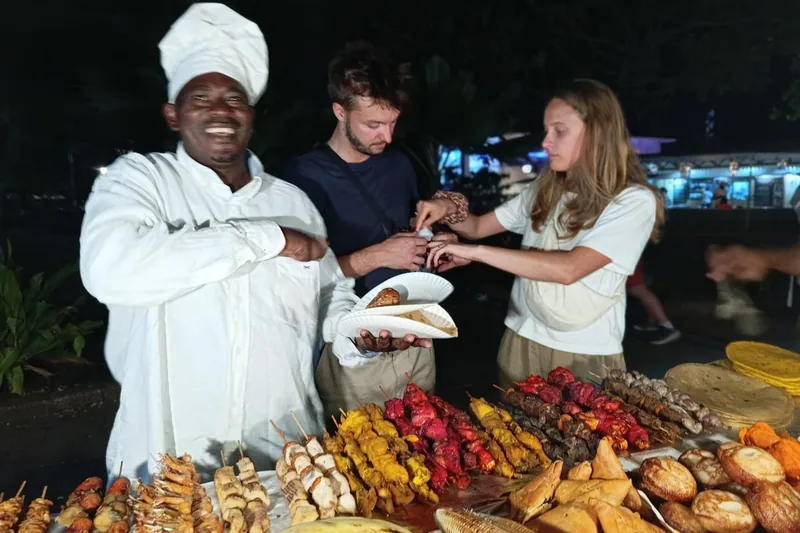
- The Forodhani night market. After sunset, stalls fill the gardens with grilled seafood, meat skewers, samosas, fresh sugar cane juice and Zanzibar pizza, a stuffed flatbread fried on a hot plate. The street food tour ends here with dinner, and our guide to the Forodhani night market covers what to eat.
The Old Fort amphitheatre also hosts music and dance shows most evenings, per Wikipedia.
An evening on foot: Darajani Market at dusk, a sunset drink with a view and dinner at the Forodhani night market, Zanzibar pizza included.
Check dates for the Stone Town street food tourWhich day trips start in Stone Town, and which tour shows you the most?
Prison Island and its giant tortoises, the Nakupenda sandbank, the spice farms and Jozani Forest. For one day, the flagship tour combines the walk, a spice farm with lunch and Prison Island.
- Prison Island (Changuu Island). About 5 km off Stone Town, per Riser Tours and Safaris Zanzibar, and a sail of 30 to 40 minutes, per the listings. Its prison was built in 1893 and the island later served as a quarantine station. Today it is home to Aldabra giant tortoises, a gift from the Seychelles, some of them well over a century old. Our Prison Island guide covers the fee and the boats.
- The Nakupenda sandbank. A strip of white sand that rises from the sea at low tide, for swimming, snorkeling and a seafood BBQ.
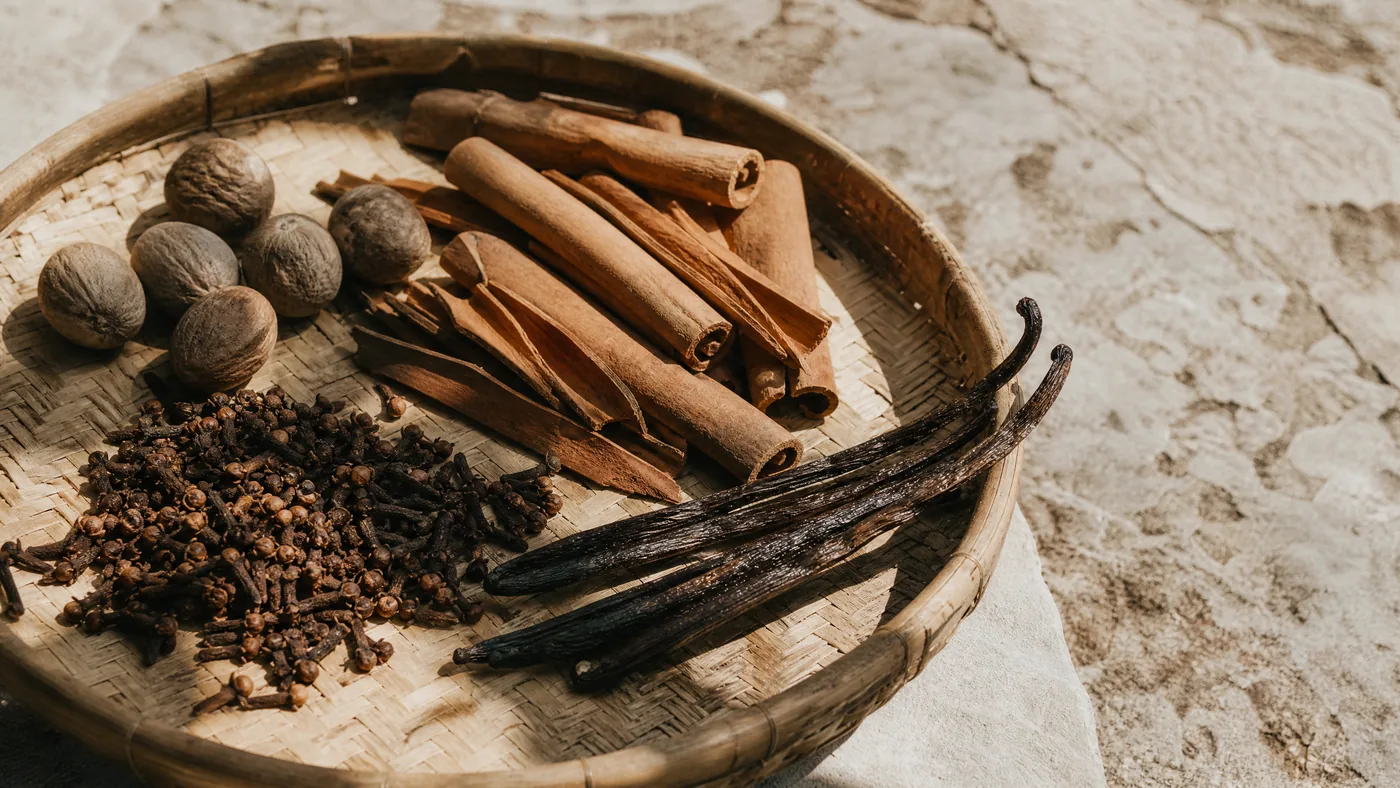
- A spice farm. Cloves, nutmeg, cinnamon, vanilla and pepper growing in a shady garden inland, with a tasting of tropical fruit. Our spice tour guide explains the visit.
- Jozani Forest. The red colobus monkeys of Jozani Chwaka Bay National Park and a mangrove boardwalk, on the Jozani Forest, spice farm and Stone Town private tour.
Here is what each tour includes:
| Tour | Starts from | Length | From | Good for |
|---|---|---|---|---|
| Stone Town, Spice Farm and Prison Island Tour with Lunch | Your hotel in Zanzibar | 5 to 9 hours | $55 | The walk, a spice farm with lunch and Prison Island |
| Prison Island, Nakupenda Sandbank and Stone Town Tour with BBQ | The Old Fort, or pickup | 7 to 8 hours | $42 | Prison Island, the sandbank and a walk in town |
| Stone Town Guided Tour with Prison Island | Your hotel in Zanzibar | 6 hours | $84 | The walk and Prison Island, tickets included |
| Prison Island and Nakupenda Sandbank Boat Tour with BBQ | Livingstone Beach Restaurant | 2 to 9 hours | $17 | The tortoises and a sandbank BBQ, island fee paid on the day |
| Stone Town Guided Tour: Culture, Slave Market and Spice Market | Your hotel in Stone Town | 2.5 to 3 hours | $19 | The history walk with the slave market |
| Stone Town Sunset Dhow Cruise with Local Music | Forodhani Gardens | 2 to 2.5 hours | $50 | The waterfront at sunset |
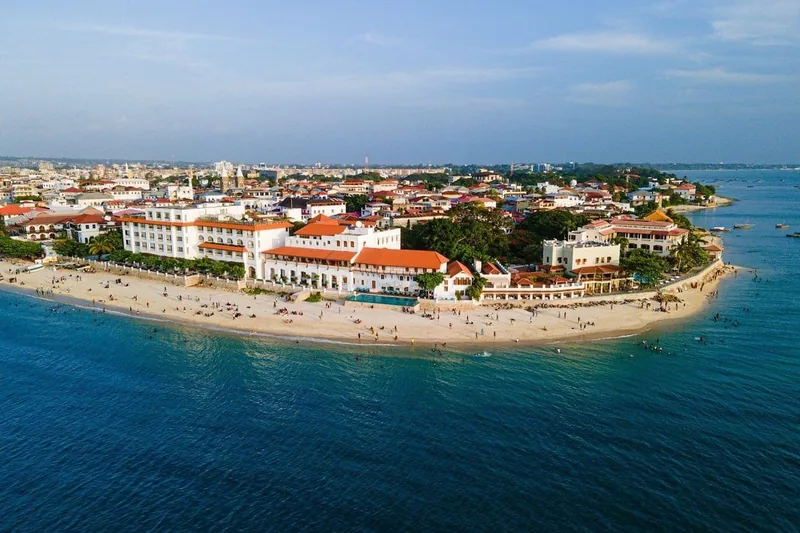
Our pick to see the most in one day: hotel pickup, the smell of cloves at a spice farm with lunch, the old town on foot and the old tortoises of Prison Island.
Explore the Stone Town, spice farm and Prison Island tour Tour detailsFrequently asked questions
What is the most famous thing in Stone Town?
The former slave market at Christ Church, the carved doors and the seafront with the Old Fort and the House of Wonders. Freddie Mercury's birthplace draws many fans too.
Is the House of Wonders open?
No. It has been closed since much of its front facade collapsed in December 2020, and restoration is under way. You see it from Mizingani Road.
How much is the slave market in Stone Town?
The walking tour listings give $10 per person. Some tours include it as an option, so check your booking.
What is there to do in Stone Town at night?
A sunset dhow or a rooftop drink, then dinner at the Forodhani night market, and music at the Old Fort amphitheatre on many evenings.
Ready to book
Choose your tour
Free cancellation up to 24 hours before on every option. Prices are from-prices in USD and move with the season.
Stone Town, Spice Farm and Prison Island Tour with Lunch
- Hotel pickup and drop-off
- Stone Town walking tour
- Boat to Prison Island and the tortoises
Stone Town Guided Tour: Culture, Slave Market and Spice Market
The history of the old town
Stone Town Food Markets and Street Food Walking Tour
- Guide
- Hotel pickup and drop-off
- Dinner at the Forodhani night market