Booking choice: The Stone Town, spice farm and Prison Island tour, from $55 per person. Check dates Tour details
Your guide snaps a leaf, crushes it and holds it under your nose. Cardamom? Cinnamon? Then a pod, a bud, a strip of bark, and the guessing game starts. A spice farm visit is relaxed, shady and full of small surprises, and it explains why ships came to these islands for centuries.
This guide covers the Spice Islands story, what a farm visit looks like, the spices and fruits you taste, where the farms are, lunch, how long it takes, and how the farm fits into a day with Stone Town, Prison Island or Jozani Forest.
The quick answer
Most spice farms lie in the countryside north and east of Stone Town, around Kizimbani and Kidichi, roughly half an hour by road. A guide walks you through the gardens to see, smell and taste cloves, nutmeg, cinnamon, vanilla, pepper and fresh fruit. The farm walk takes about one and a half to two hours. The most booked day here adds lunch at the farm, a Stone Town walk and Prison Island.
Why is Zanzibar called the Spice Islands?
Because of cloves. The Omani sultans brought the clove tree to Zanzibar in the first half of the 19th century, and the islands became famous worldwide for it and for other spices.
Wikipedia says the archipelago is sometimes called the Spice Islands by locals, a name that comes from its plantations. The clove came from the Moluccas, in today's Indonesia, and was introduced by the Omani sultans who ruled from Stone Town. Zanzibar, mostly the island of Pemba, was once the world's leading clove producer. Today it ranks a distant third, with about 7 percent of world supply against Indonesia's 75 percent.
The main spices grown on the islands, by the same source, are cloves, nutmeg, cinnamon, coconut and black pepper. Stone Town grew rich on this trade, and Wikipedia notes the town was renowned for the commerce of spices, mostly cloves, and of enslaved people.
Expert Africa makes the link plain: the clove boom relied heavily on enslaved labor. Good farm guides talk about this calmly, and it ties the farm to the slave market site in town. Our guide to things to do in Stone Town covers that visit.
What happens on a spice farm visit?
A guide walks you slowly through a shady garden, stopping at each plant so you can touch, smell and taste it, and often asks you to guess what it is first.
The listing of the Stone Town, spice farm and Prison Island day sums it up: at the spice farm, your guide describes each plant while you smell, taste and guess what it is. You learn how the spices are grown and what they are used for, in cooking, medicine and cosmetics, by the listing of the Jozani Forest and spice farm day.
The small rituals of a visit, as Expert Africa and the listings describe them:
- The guessing game. Crush, rub, sniff, taste. A root turns out to be turmeric, a strip of bark smells of cinnamon, a pod turns out to be vanilla.
- Palm-leaf crafts. Helpers weave bracelets, rings and crowns from coconut and palm leaves as you walk.
- The fruit tasting. Cut fruit at the end, often under a shelter.
- The farm shop. Spices, soaps, oils and balms made on the island, if you want to take some home.
Nomado Travel adds that some farms show the rope technique used to climb a clove tree.
Which spices and fruits will you see and taste?
Cloves, nutmeg, cinnamon, vanilla, black pepper, cardamom, ginger and turmeric, then fruit such as pineapple, jackfruit, mango and red banana.
The mix depends on the farm and the season, but these come up on nearly every visit:
| Plant | What you see | Source |
|---|---|---|
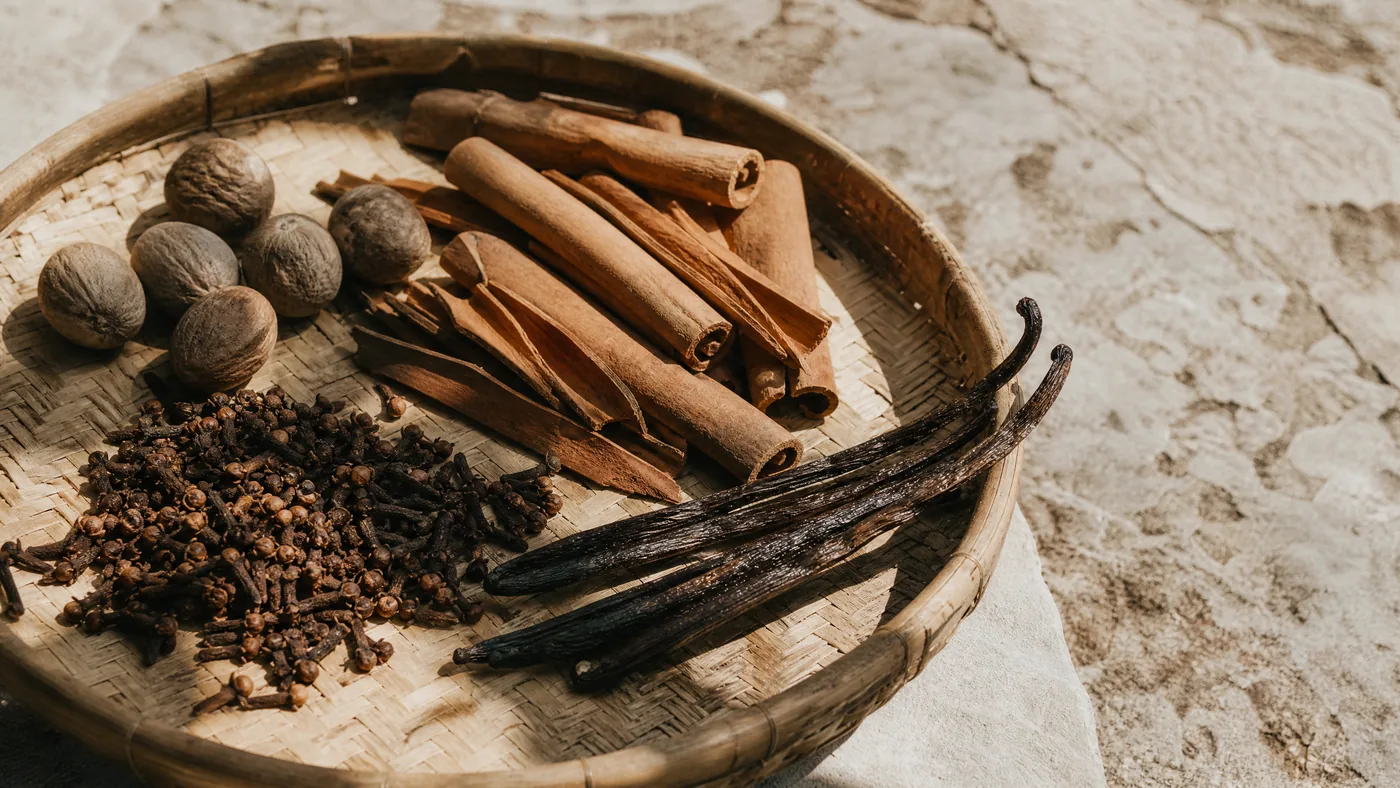
| Cloves | The dried flower buds of the clove tree, the spice that made Zanzibar famous | Wikipedia; tour listings |
| Nutmeg | A seed wrapped in red mace, two spices from one fruit | Expert Africa |
| Cinnamon | The inner bark of the tree, peeled and smelled on the spot | Expert Africa |
| Vanilla | A climbing orchid whose green pods must be cured | Expert Africa |
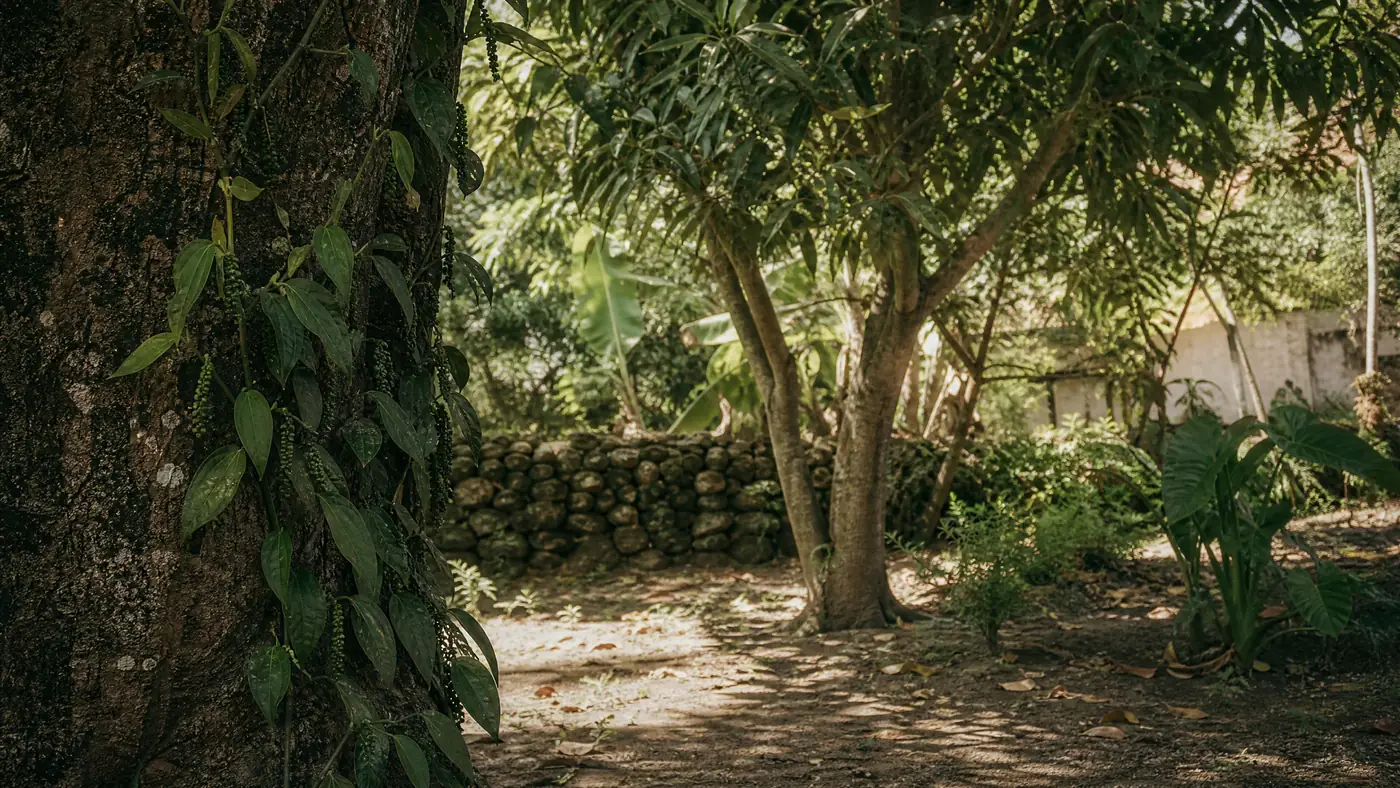
| Black pepper | Green berries on a vine, chewed straight off it | Nomado Travel; Expert Africa |
| Cardamom, ginger, turmeric | Roots and pods dug up or picked for you | Tour listings; Nomado Travel |
| Fruit | Pineapple, jackfruit, durian, mango, watermelon, red and yellow banana | Listing of the Jozani day |
Seasonal fruits change through the year, so the tasting plate in November is not the one you get in July. Ask your guide what is ripe.
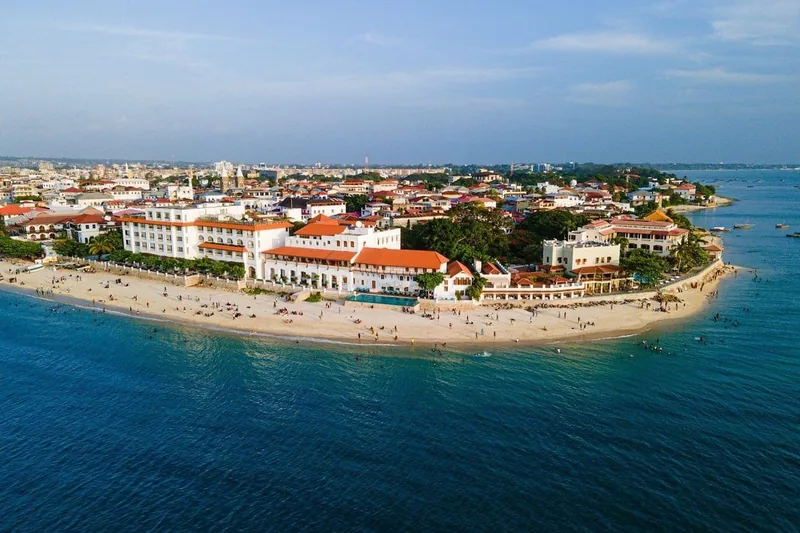
The spice farm the easy way: hotel pickup, a guided walk through the gardens with lunch and soft drinks, then Stone Town and the tortoises of Prison Island.
Explore the Stone Town, spice farm and Prison Island tour Tour detailsWhere are the spice farms, and how far are they from Stone Town?
In the green countryside inland from Stone Town, mainly around Kizimbani and Kidichi. Nomado Travel puts them at roughly 20 to 30 km, or about half an hour to 45 minutes by road.
There is no single official spice farm. Nomado Travel names Kizimbani and Kidichi as the most visited areas, with farms such as Dole and Tangawizi on some itineraries, and says the quality of the guide matters more than the farm. Wikivoyage also points travelers with their own car to the Kizimbani area.
Near Kidichi stands a small piece of royal history. Lonely Planet describes the Kidichi Persian Baths, built in 1850 by Sultan Seyyid Said for his Persian wife Scheherezade, about 11 km northeast of Zanzibar Town among the plantations. Some spice tours stop there.
From the beaches the drive is longer. The listing of the most booked day allows about an hour and a half by van from the hotel pickup to the farm. The Jozani Forest, spice farm and Stone Town private tour picks up anywhere on the island and links the farm with the forest in the south.
A private day across the island: the red colobus monkeys of Jozani Forest, a spice farm with fruit tasting and a guided Stone Town walk.
Check dates for the Jozani Forest, spice farm and Stone Town private tourIs lunch included on a spice tour?
On the most booked day, yes: lunch and soft drinks are served at the spice farm. On the private Jozani day, lunch is not included, and you stop to eat in Stone Town on request.
Lunch is one of the best parts of a farm day, when it is on the program. The listing of the Stone Town, spice farm and Prison Island day promises a culinary journey through Swahili cuisine at the farm, with soft drinks, and gives the farm stop about four hours including the meal.
Expert Africa describes the lunch on its own farm tours as curries with chapati and rice, with vegetarian and non-vegetarian dishes, served when requested. Nomado Travel adds that longer tours often cook with spices grown on the property.
The Jozani day is different: its listing names fruit tasting at the farm, lists lunch as not included, and offers a lunch break in Stone Town on request. Bring some cash for it.
How long does a spice tour take, and what should you bring?
The farm walk takes about one and a half to two hours. As a half day from Stone Town, allow four to five hours; as part of a combined day, six hours or more.
Nomado Travel times the farm walk at 90 minutes to 2 hours, plus the drive each way, and suggests four to five hours for a half day. The combined days on this site run longer: the most booked day lasts 5 to 9 hours depending on the option, and the Jozani day about 9 hours.
What to bring, from the listings:
- Comfortable shoes. Paths are earth and leaves, sometimes muddy after rain.
- Water, sun cream and a hat. The farm is shady, the drive and the town less so.
- A camera. The red mace around a nutmeg seed is worth a close-up.
- Small notes in shillings. Wikivoyage notes that the helpers who climb the trees, cut the fruit or weave the palm leaves usually expect a small tip, around TZS 1,000 to 2,000, and Nomado Travel gives $2 to 5 for the guide on short tours.
Gardens mean insects. For advice on mosquitoes and malaria, check your national travel health service or doctor before the trip.
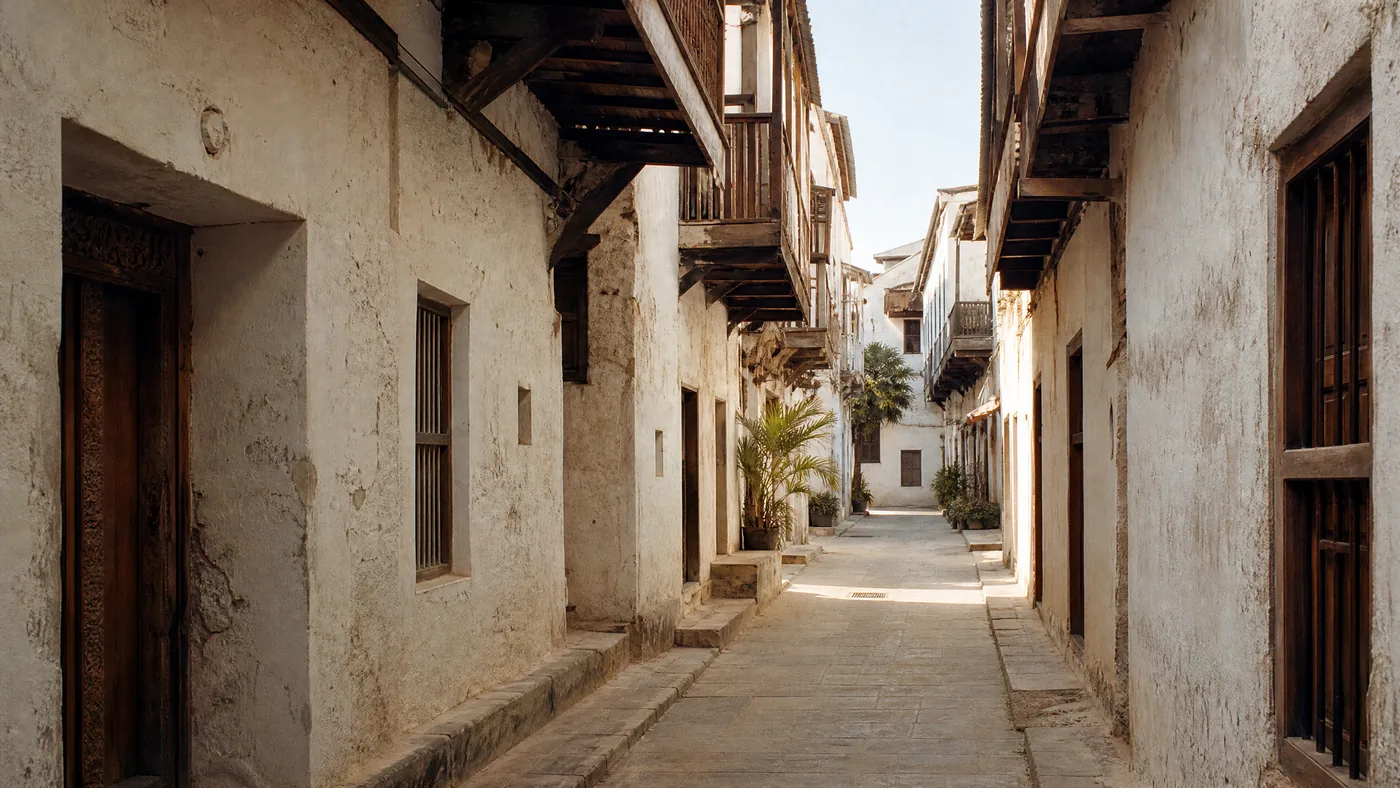
The most booked day around Stone Town: a spice farm with lunch, the old town on foot and the boat to Prison Island.
Check dates for the Stone Town, spice farm and Prison Island tourHow do you combine a spice farm with Stone Town, Prison Island or Jozani?
Two days on this site include a farm: the most booked day pairs it with Stone Town and Prison Island, and the private Jozani day pairs it with the forest and Stone Town.
The farm takes half a day at most, so it is almost always part of something bigger:
- Spice farm, Stone Town and Prison Island. The most booked day picks you up at your hotel, spends the morning at the farm with lunch, walks the old town for about two hours with a stop at the Old Fort, then takes the boat to the giant tortoises for about an hour.
- Jozani Forest, spice farm and Stone Town. The private Jozani day starts with the red colobus monkeys and the mangrove boardwalk in Jozani Chwaka Bay National Park, then the farm and fruit tasting, then a guided walk and shopping time in town. The park dates from 2004 and is home to the Zanzibar red colobus, about 1,000 of them by Wikipedia.
- Spices in town only. Short on time? Darajani Market sells spices next to the fruit and fish, and the private Stone Town walking tour goes through it.
The short rains of November and December are much lighter than the long rains, by Expert Africa, and the farms are shady and green all year. For the island trip, see our guide to Prison Island from Stone Town.

Monkeys, mangroves and the old town: a private guide, the red colobus of Jozani Forest, a spice farm with fruit tasting and Stone Town.
Explore the Jozani Forest, spice farm and Stone Town private tour Tour detailsWhich tours include a spice farm?
The Stone Town, spice farm and Prison Island tour with lunch, and the Jozani Forest, spice farm and Stone Town private tour. The town walks show you spices at the market, not on a farm.
Here they are side by side. Prices are from-prices in USD, and every tour cancels free up to 24 hours before.
| Tour | Spices | Lunch | Also | From |
|---|---|---|---|---|
| Stone Town, spice farm and Prison Island | Spice farm with tasting | At the farm, with soft drinks | Stone Town walk, Prison Island | $55 |
| Jozani Forest, spice farm and Stone Town | Spice farm with fruit tasting | Not included | Jozani Forest, Stone Town | $70 |
| Private Stone Town walking tour | Spice stalls at Darajani Market | Not included | Three hours in the old town | $17 |
| Stone Town: culture, slave market and spice market | Darajani Market | Not included | Slave market site, Old Fort | $19 |
The two farm days both include hotel pickup. The Jozani day is private, the most booked day runs as a shared group or a private option.
Frequently asked questions
How far are the spice farms from Stone Town?
Most are around Kizimbani and Kidichi, roughly 20 to 30 km from Stone Town, or about half an hour to 45 minutes by road, according to Nomado Travel.
How long does a Zanzibar spice tour take?
The farm walk itself takes about one and a half to two hours. A half day with transfers takes four to five hours; combined days with Stone Town run longer.
What do you taste on a spice farm in Zanzibar?
Cloves, nutmeg, cinnamon, vanilla, black pepper, cardamom, ginger and turmeric, plus fresh fruit such as pineapple, jackfruit, mango and banana.
Is the spice tour worth it in the rainy season?
Yes. The farms are shady and green all year, and the short rains of November and December are much lighter than the long rains of March to May.
Ready to book
Choose your tour
Free cancellation up to 24 hours before on every option. Prices are from-prices in USD and move with the season.
Stone Town, Spice Farm and Prison Island Tour with Lunch
- Hotel pickup and drop-off
- Stone Town walking tour
- Boat to Prison Island and the tortoises
Jozani Forest, Spice Farm and Stone Town Private Tour
Monkeys, mangroves and the old town
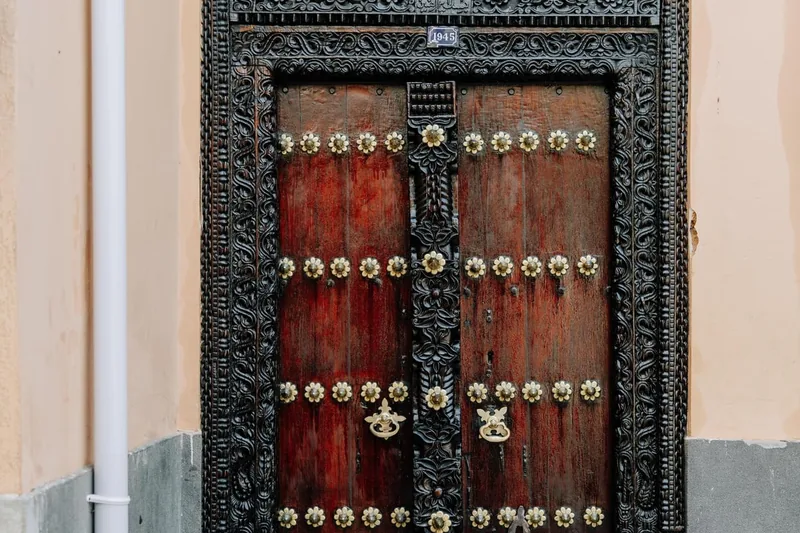
Private Stone Town Walking Tour with a Guide
- Private guide
- A bottle of water each
- Meet at the Old Fort